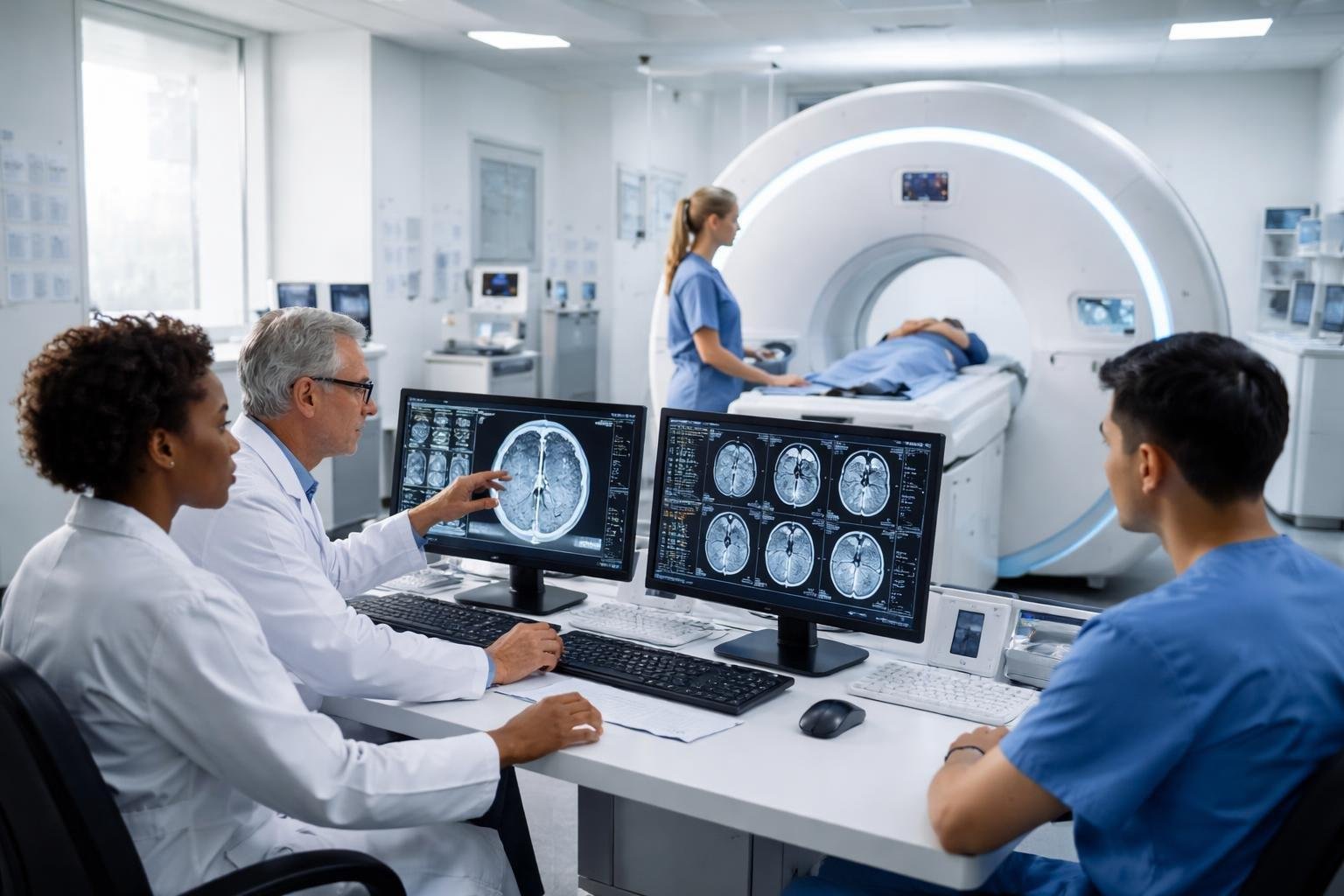
Exploring MRI Tech: What You Need to Know
MRI (Magnetic Resonance Imaging) technology is one of the most advanced and crucial imaging tools used in the healthcare field. It has revolutionized the way doctors diagnose, treat, and monitor various medical conditions. As a non-invasive, highly detailed, and safe imaging modality, MRI is instrumental in providing physicians with the insight they need to make accurate diagnoses. In this blog post, we will dive into the fundamentals of MRI technology, how it works, its applications, and why it is essential in modern medicine.
What Is MRI Technology?
MRI stands for Magnetic Resonance Imaging. It is a medical imaging technique that uses powerful magnets and radio waves to create detailed images of the internal structures of the body. Unlike X-rays or CT scans, which rely on ionizing radiation, MRI uses magnetic fields and non-ionizing radiation, making it a safer option for many patients.
An MRI machine consists of a large magnet, a powerful computer system, and radio frequency coils. The magnet creates a strong magnetic field that aligns the protons in the body, specifically in the hydrogen atoms present in water molecules. Once aligned, radio waves are directed at the protons, which briefly knock them out of alignment. As the protons return to their original alignment, they emit signals that are captured by the MRI machine and converted into highly detailed images.
How MRI Works
The process of an MRI involves several steps that are both intricate and highly technical. First, a patient is positioned on a table that slides into the MRI machine’s tube. The machine’s magnet creates a magnetic field around the patient, which causes the protons in the body’s water molecules to align in a specific direction.
Once the protons are aligned, the MRI machine sends short bursts of radio waves into the body. This knocks the protons out of alignment. As they realign, they release energy in the form of radio signals. These signals are collected by the MRI machine's sensors, which then convert the information into images.
The images generated by an MRI are incredibly detailed and can depict soft tissues, organs, and even the brain in ways that other imaging methods cannot. These images are then analyzed by radiologists or medical professionals to detect any abnormalities, such as tumors, injuries, or diseases.
Types of MRI Machines
There are several types of MRI machines, each designed for different purposes. The most common types include:
- Closed MRI: This is the traditional MRI machine where the patient is surrounded by the magnetic field. It’s the most widely used MRI machine and provides the most detailed images. However, some people may feel claustrophobic due to the enclosed space.
- Open MRI: In this type, the MRI machine has an open design, providing more space for patients who may experience anxiety or discomfort in a closed machine. While it is more comfortable for some patients, the image quality may not be as detailed as that of a closed MRI.
- Extremity MRI: Used for imaging the limbs (arms, legs), this MRI machine focuses on a specific area of the body rather than the whole body. It is smaller and can be more comfortable for patients who need only a localized scan.
- Functional MRI (fMRI): fMRI is a specialized form of MRI that measures brain activity by detecting changes in blood flow. It is often used in research or to monitor brain function in patients with neurological conditions.
Applications of MRI
MRI is a versatile and invaluable diagnostic tool used in many areas of medicine. Some of the most common applications include:
- Neurological Imaging: MRI is widely used to examine the brain and spinal cord. It can help detect conditions such as multiple sclerosis, brain tumors, strokes, spinal cord injuries, and degenerative diseases like Alzheimer's disease.
- Cardiovascular Imaging: MRI can also provide detailed images of the heart and blood vessels. It is used to assess heart function, detect blockages, and diagnose conditions such as heart disease, congenital heart defects, and heart attacks.
- Musculoskeletal Imaging: MRI is particularly useful for examining soft tissues, ligaments, muscles, and cartilage in the body. It is commonly used to diagnose injuries such as torn ligaments, cartilage damage, and muscle tears.
- Oncology: MRI is often used in cancer detection and staging. It can identify tumors and help determine their size, location, and spread. It is particularly useful for imaging cancers of the brain, liver, prostate, and breast.
- Abdominal Imaging: MRI can be used to examine organs in the abdominal area, such as the liver, pancreas, kidneys, and intestines. It can help diagnose conditions like liver disease, pancreatitis, and abdominal tumors.
- Pediatric Imaging: MRI is a preferred imaging technique for children as it does not involve radiation. Pediatric patients often undergo MRI scans to diagnose congenital conditions, brain development issues, or musculoskeletal disorders.
Benefits of MRI
- Non-invasive: MRI is a non-invasive procedure, meaning it doesn’t require any incisions or injections (unless for contrast material). This makes it a less risky and more comfortable option for patients compared to surgical procedures.
- No Radiation Exposure: Unlike X-rays or CT scans, MRI does not expose patients to ionizing radiation, making it a safer option for repeated imaging, especially for vulnerable populations such as pregnant women and children.
- High-Resolution Imaging: MRI provides exceptional clarity and detail, making it one of the best options for imaging soft tissues like the brain, muscles, and organs.
- Comprehensive Diagnostic Tool: MRI can provide detailed information about many different types of tissue, organs, and systems within the body, making it invaluable in diagnosing a wide range of conditions.
- Versatility: From imaging the brain to examining muscles, MRI can be used in various specialties, including neurology, cardiology, oncology, and musculoskeletal medicine.
Limitations of MRI
While MRI is an incredibly useful diagnostic tool, it does have some limitations. Some of the common drawbacks include:
- Cost: MRI scans can be expensive, especially when compared to other imaging methods like X-rays or ultrasound. The cost may not be covered by all insurance plans, making it less accessible for some patients.
- Claustrophobia: Some patients experience anxiety or claustrophobia when placed inside the narrow MRI tube. While open MRI machines can provide a solution, they may not always offer the same image quality.
- Time-consuming: MRI scans can take longer than other imaging methods. A typical MRI may take anywhere from 20 minutes to over an hour, depending on the area being scanned.
- Limited for Some Conditions: MRI may not always be the best choice for every condition. For example, it is not as effective for imaging bones or detecting certain types of cancer. In these cases, other imaging methods like CT scans or X-rays may be preferred.
Preparing for an MRI
Before undergoing an MRI scan, there are a few things you should know to ensure the procedure goes smoothly:
- Clothing: You may be asked to change into a hospital gown, as clothing with metal (zippers, buttons) can interfere with the magnetic field.
- Metal Objects: It is crucial to remove any metal items, including jewelry, watches, and hearing aids, as they can be affected by the magnetic field and may pose a safety risk.
- Contrast Agents: In some cases, a contrast agent (dye) may be injected into your veins to enhance the quality of the images. This helps to highlight specific areas of the body, such as blood vessels or tumors.
- Stay Still: During the scan, it is essential to stay still to ensure clear images. The MRI machine will make loud noises during the procedure, so you may be given earplugs or headphones to block the noise.
Conclusion
MRI technology has become an indispensable tool in modern medicine. With its non-invasive nature, ability to provide high-resolution images, and lack of radiation exposure, MRI has changed the landscape of medical diagnostics. It allows doctors to detect and monitor conditions that would otherwise be challenging to diagnose. Whether used in neurological imaging, cancer detection, or musculoskeletal assessments, MRI continues to play a crucial role in improving patient care and outcomes. As MRI technology advances, we can expect even more refined techniques that will push the boundaries of what’s possible in healthcare imaging.