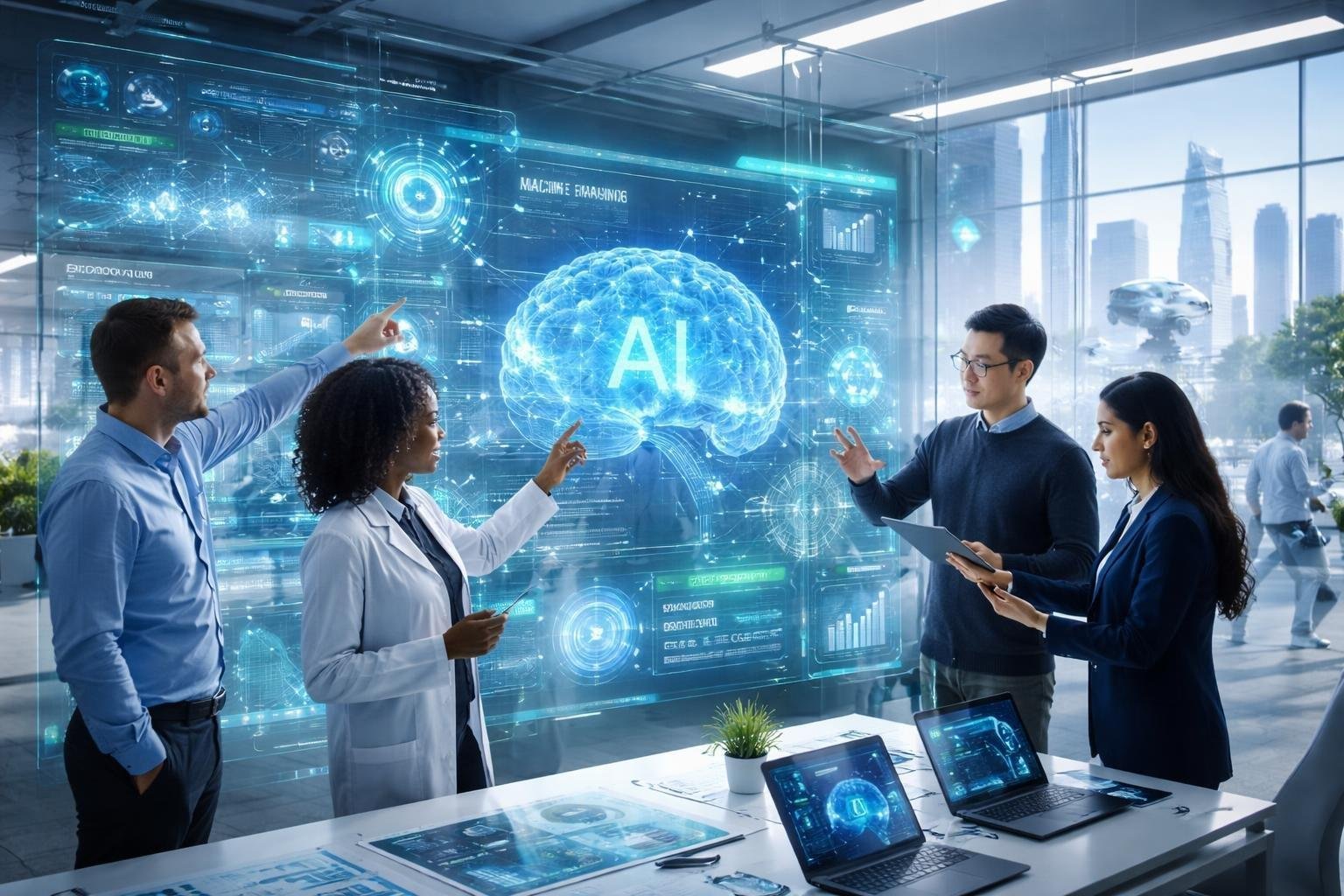
The Future of AI Technology
Artificial Intelligence (AI) is no longer just a futuristic concept; it’s rapidly transforming industries and societies. As AI technology continues to evolve, it holds the potential to revolutionize how we live, work, and interact with the world around us. In this blog post, we’ll explore the exciting possibilities that the future of AI holds and its implications for various sectors.
AI in Everyday Life: A New Era of Convenience
In the near future, AI will become an even more integral part of our daily lives, providing solutions that enhance convenience and efficiency. We are already witnessing AI-driven technologies in the form of virtual assistants like Siri, Alexa, and Google Assistant, which help manage tasks, schedule appointments, and provide information at the tip of our fingers. However, the future promises to take this a step further with more advanced AI systems capable of anticipating our needs before we even ask.
Imagine a world where your AI-powered home system understands your preferences—adjusting the temperature, lighting, and even suggesting meals based on your diet and current mood. Autonomous vehicles, which are already being tested, could become mainstream, allowing for safer and more efficient transportation. These technologies will not only make life more convenient but also safer and more personalized.
AI in Healthcare: Revolutionizing Diagnosis and Treatment
One of the most promising fields where AI is set to make a profound impact is healthcare. AI has the potential to transform how doctors diagnose, treat, and prevent diseases. Currently, AI is already being used for diagnostic purposes, such as analyzing medical images and detecting anomalies in X-rays and MRIs with greater accuracy than human doctors.
In the future, AI may be able to predict health issues before they even manifest. For example, AI-powered systems could analyze a person’s genetic data, lifestyle habits, and medical history to provide personalized health recommendations or even predict the likelihood of developing certain conditions. Furthermore, AI could play a key role in drug discovery, speeding up the process of identifying potential new medications and treatments.
AI in the Workplace: Automating Tasks and Empowering Workers
AI is also reshaping the way we work. In the coming years, automation will continue to take over repetitive, mundane tasks across various industries, including manufacturing, customer service, and logistics. AI-powered systems will handle data analysis, inventory management, and even customer interactions, freeing up employees to focus on more complex and creative tasks.
This shift will lead to the rise of new job roles that require human-AI collaboration. Rather than replacing jobs, AI will empower workers by handling routine tasks, allowing them to focus on decision-making, strategy, and innovation. For example, in sectors like marketing, AI tools can automate content generation, data analysis, and even ad targeting, leaving marketing professionals more time to develop creative campaigns and strategies.
AI in Education: Personalized Learning for All
The future of AI in education is particularly exciting. AI has the potential to revolutionize how students learn by providing personalized learning experiences. With AI-powered platforms, educators can assess students’ learning styles, strengths, and weaknesses, tailoring lesson plans to meet individual needs.
Moreover, AI can help bridge the gap for students who may require additional support. For instance, AI tools can offer real-time feedback, recommend additional resources, and even create interactive simulations to make learning more engaging. These technologies also allow for remote learning, which has become increasingly popular and essential, especially in the wake of the COVID-19 pandemic.
AI in Business: Improving Decision-Making and Efficiency
In the business world, AI is already driving significant transformations, particularly in the areas of data analysis, decision-making, and customer experience. AI-powered analytics tools can process vast amounts of data in real-time, providing businesses with insights that were previously impossible to obtain. These insights enable companies to make better decisions, predict trends, and respond to market changes with greater agility.
In the future, AI could become even more predictive, identifying potential business challenges before they occur. For example, AI could forecast fluctuations in demand, optimize supply chain management, and improve customer service interactions. Chatbots and virtual assistants are already being used in customer service to handle basic inquiries, but in the future, these systems will be able to understand complex queries and provide more personalized, human-like responses.
AI and Ethics: Navigating the Challenges Ahead
While the future of AI technology holds incredible promise, it also raises important ethical considerations. As AI systems become more autonomous, questions about accountability, transparency, and bias will become increasingly relevant. For instance, AI algorithms used in hiring processes or criminal justice systems have the potential to perpetuate existing biases, leading to unfair outcomes.
Ensuring that AI systems are ethical, transparent, and fair will be essential. Governments, industries, and researchers will need to collaborate to establish guidelines and regulations that ensure AI is developed and used responsibly. Additionally, as AI becomes more advanced, we will need to address concerns about privacy, data security, and the potential for AI to be used for malicious purposes, such as surveillance or cyberattacks.
The Role of AI in Sustainability: Addressing Global Challenges
AI is also poised to play a key role in addressing some of the world’s most pressing global challenges, including climate change, resource management, and healthcare accessibility. For example, AI can help optimize energy consumption by predicting demand patterns and improving the efficiency of power grids. It can also aid in environmental conservation efforts by analyzing data on deforestation, biodiversity, and climate patterns to inform policy decisions.
In the healthcare sector, AI can help address disparities in access to medical services by providing affordable, automated diagnostic tools to underserved populations. AI-powered systems can assist in monitoring public health data, enabling quicker responses to emerging health threats, such as pandemics.
AI and the Future of Creativity
AI’s potential to drive creativity is another fascinating aspect of its future. AI tools are already being used to assist in music composition, art generation, and even film production. These tools can analyze vast amounts of data to help artists create new works of art, write music, or even design products.
In the future, AI could become an essential collaborator for creatives, helping them explore new ideas, generate prototypes, and refine their concepts. This could lead to the emergence of entirely new art forms, as AI assists in pushing the boundaries of human creativity. However, this also raises questions about the nature of art and whether AI-generated works can be considered truly creative.
Preparing for an AI-Driven Future
As AI technology continues to advance, it will be crucial for individuals, businesses, and governments to adapt to the changes it brings. Education and training will play a key role in preparing the workforce for an AI-driven future. By equipping people with the skills to work alongside AI, we can ensure that the workforce is prepared for the opportunities and challenges that lie ahead.
Moreover, fostering collaboration between humans and AI will be essential to unlocking the full potential of this technology. Rather than viewing AI as a replacement for human workers, it should be seen as a tool that can enhance our abilities, helping us solve problems more effectively and creatively.
Conclusion: A Bright, Transformative Future
The future of AI technology is both exciting and transformative. As AI continues to evolve, it will reshape nearly every aspect of our lives, from how we work and learn to how we address global challenges. While there are ethical concerns and challenges to navigate, the potential benefits of AI are immense. By embracing AI responsibly and innovatively, we can unlock a future that is smarter, more efficient, and more sustainable for all.